
CBAM Made Clear
From 1 January 2027, steel has a carbon price at the UK border.
UK CBAM taxes the carbon embodied in imported goods, including stainless steel fasteners. Get the essentials below: what's in scope, who pays and how the cost is worked out. Then sign up for email alerts whenever HMRC publishes an update.
 EcoVadis Platinum
ISO 9001:2015 · LRQA
BSSA member
BIAFD member
Pick your situation
UK CBAM lands differently depending on who imports the goods.
Apex holds the UK CBAM liability
The importer named on the customs declaration is responsible for UK CBAM. When you buy from Apex, that importer is Apex.
- TodayKeep ordering as normalNothing changes in how you buy from us.
- From 2027Understand the cost driversCBAM cost depends on weight, embodied emissions and the UK CBAM rate, not on price.
- Any timeAsk our teamWe can explain how we're preparing and what it means for your orders.
UK CBAM applies to you from 1 January 2027
If you're the importer on the customs declaration and import over £50,000 of CBAM goods in a rolling 12 months, you hold the liability.
- 2027Keep recordsKeep records for the full 2027 calendar year: weight and embodied emissions.
- By 1 Jan 2028RegisterRegistration for UK CBAM will open by 1 January 2028.
- 31 May 2028First return and paymentCovering imports from 1 January to 31 December 2027.
It depends who is named on the declaration
The importer on the customs declaration is liable once they import over £50,000 of CBAM goods in a rolling 12-month period.
- Step 1Check your declarationsWho is named as the importer on the customs declaration?
- Step 2Total your CBAM importsIs it over £50,000 in a rolling 12-month period?
- Step 3Talk to usOur team can help you work it out.
The facts that matter
Screws, bolts, nuts, coach screws, screw hooks, rivets, cotters, cotter pins, washers (including spring washers) and similar articles, of iron or steel.

Other articles of iron or steel. Greenhouse gas: carbon dioxide.
Of CBAM goods imported in a rolling 12-month period.
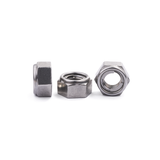
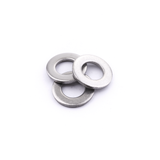
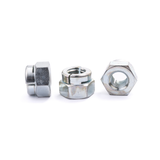
Our common CBAM items include, but are not limited to, nuts, bolts, washers and Aerotight nuts. Full list: UK CBAM policy summary.
Not based on purchase price
UK CBAM is driven by weight, embodied emissions, the UK CBAM rate and any eligible carbon price already paid abroad.
UK CBAM: major timeline
- Jul 2026Policy updateSecondary legislation laid; policy summary updated.
- 1 Jan 2027UK CBAM startsCBAM applies to specified UK imports.
- 2027First reporting yearKeep records for the full 2027 calendar year.
- By 1 Jan 2028Registration opensRegistration for UK CBAM will open.
- 31 May 2028First return and paymentCovering imports from 1 Jan to 31 Dec 2027.
- 2028Quarterly cycleAccounting periods move to quarterly returns and payments.
- 28 Feb 2029Q4 2028 deadlineFinal quarterly deadline for 2028 accounting periods.
Reporting periods
The first accounting period covers the whole of 2027. From 2028, returns and payments are due quarterly.
| Accounting period | Return and payment deadline |
|---|---|
| 1 Jan 2027 to 31 Dec 2027 | 31 May 2028 |
| 1 Jan 2028 to 31 Mar 2028 | 31 Jul 2028 |
| 1 Apr 2028 to 30 Jun 2028 | 29 Sep 2028 |
| 1 Jul 2028 to 30 Sep 2028 | 30 Nov 2028 |
| 1 Oct 2028 to 31 Dec 2028 | 28 Feb 2029 |
Latest CBAM updates
Key publications from HMRC and the UK government, new UK CBAM legislation and EU CBAM news from the European Commission, in brief.
- 2 CBAM pages published or updatedHMRC has published or updated: Check the default values for the Carbon Border Adjustment Mechanism (CBAM); Getting the emissions intensity when importing Carbon Border Adjustment Mechanism (CBAM) goods.Read on GOV.UK →
- 2 CBAM pages published or updatedHMRC has published or updated: Prepare for the Carbon Border Adjustment Mechanism (CBAM); Check if you’ll need to register for Carbon Border Adjustment Mechanism (CBAM).Read on GOV.UK →
- 2 CBAM pages published or updatedHMRC has published or updated: Work out your Carbon Price Relief; Carbon border adjustment mechanism (CBAM): Policy summary.Read on GOV.UK →
- Carbon Border Adjustment Mechanism (CBAM): a consultation on sectoral scope expansion to include refinery productsHMRC has published "Carbon Border Adjustment Mechanism (CBAM): a consultation on sectoral scope expansion to include refinery products". This consultation seeks views on the feasibility and impacts of CBAM sectoral scope expansion to refinery products.Read on GOV.UK →
Show earlier updates
- Send HMRC questions about the Carbon Border Adjustment Mechanism (CBAM)HMRC has updated "Send HMRC questions about the Carbon Border Adjustment Mechanism (CBAM)". Change note: Information has been added to confirm that HMRC will review and respond to your feedback within 15 days.Read on GOV.UK →
- Send HMRC questions about the Carbon Border Adjustment Mechanism (CBAM)HMRC has published a page on how to send questions about the Carbon Border Adjustment Mechanism (CBAM). General queries, such as whether CBAM applies to you, support with registration, and reporting and record keeping, can be sent using an online form. Detailed policy and technical questions can be emailed to cbampolicyteam@hmrc.gov.uk. To be added to the CBAM mailing list, include "CBAM mailing list" in the subject line. HMRC usually replies by email within 14 days.Send HMRC questions about CBAM →
- Default values, rates and technical guidance publishedHMRC has published the CBAM default emissions values for each sector, including iron and steel, plus guidance on CBAM rates, illustrative rates with a worked example, how to get your emissions intensity, and technical guidance on monitoring, verifying and reporting emissions. The policy summary, the force of law notices page and the record keeping guidance were also updated, and new guidance covers verifying emissions data and overseas installations.Iron and steel default values on GOV.UK →
Also published
- Check the default values for CBAM (all sectors)
- Rates for CBAM
- Illustrative CBAM rates and worked example
- Getting the emissions intensity when importing CBAM goods
- Technical guidance for monitoring, verifying and reporting emissions
- CBAM policy summary (updated)
- Force of law notices and reference document (updated)
- Keeping records for CBAM (updated)
- Verifying emissions data for CBAM goods
- Monitoring emissions as an overseas installation exporting CBAM goods to the UK
- Responsibilities if you accredit verifiers for CBAM goods
- Force of law notices publishedHMRC has published the CBAM force of law notices and the reference document that goes with them.Read on GOV.UK →
- Policy summary updated and new guidance collectionThe CBAM policy summary has been updated, alongside a collection of guidance on what to do if you import CBAM goods into the UK from 1 January 2027.Read on GOV.UK →
- Qualifying carbon pricing schemesNew guidance on checking whether the embodied emissions in your goods have been subject to a qualifying carbon pricing scheme, plus a provisional list of current schemes.Read on GOV.UK →
- Registration and carbon price relief guidanceGuidance on whether you'll need to register for CBAM, how to claim carbon price relief and how to get a carbon pricing verification form.Read on GOV.UK →
Sources: GOV.UK, legislation.gov.uk, European Commission · Last checked 19 Nov 2026
Default emissions values for fasteners
HMRC published default values for iron and steel on 16 Oct 2026. These are the stainless steel fastener codes under 7318, in tonnes of CO₂e per tonne of product.
| CN code | Description | tCO₂e per tonne |
|---|---|---|
| 73181210 | Wood screws of stainless steel (excluding coach screws) | 6.635 |
| 73181410 | Self-tapping screws, of stainless steel (excluding wood screws) | 5.352 |
| 73181535 | Screws and bolts, of stainless steel “whether or not with their nuts and washers”, without heads (excluding screws and bolts for fixing railway track construction material) | 6.139 |
| 73181552 | Screws and bolts, of stainless steel “whether or not with their nuts and washers”, with slotted or cross-recessed heads (excluding wood screws and self-tapping screws) | 4.654 |
| 73181562 | Hexagonal-socket head screws and bolts, of stainless steel “whether or not with their nuts and washers” (excluding wood screws, self-tapping screws and screws and bolts for fixing railway track construction material) | 6.371 |
| 73181575 | Hexagon screws and bolts, of stainless steel “whether or not with their nuts and washers” (excluding with socket head, wood screws, self-tapping screws and screws and bolts for fixing railway track construction material) | 6.597 |
| 73181631 | Blind rivet nuts of stainless steel | 5.229 |
| 73181639 | Nuts of stainless steel (excluding blind rivet nuts) | 5.166 |
How HMRC says to use them
- The values apply to each CBAM good, regardless of origin.
- You must use them if you're not reporting actual verified emissions.
- If you submit a CBAM return that uses default values, you cannot amend it later with actual emissions data.
- You cannot use actual emissions data for precursor CBAM goods and default values for the final CBAM good.
Show all 43 fastener codes (7318 and 7326)
| CN code | Description | tCO₂e per tonne |
|---|---|---|
| 73181100 | Coach screws of iron or steel | 3.332 |
| 73181210 | Wood screws of stainless steel (excluding coach screws) | 6.635 |
| 73181290 | Wood screws of iron or steel other than stainless (excluding coach screws) | 2.968 |
| 73181300 | Screw hooks and screw rings, of iron or steel | 3.176 |
| 73181410 | Self-tapping screws, of stainless steel (excluding wood screws) | 5.352 |
| 73181491 | Spaced-thread screws of iron or steel other than stainless | 2.935 |
| 73181499 | Self-tapping screws of iron or steel other than stainless (excluding spaced-thread screws and wood screws) | 3.013 |
| 73181520 | Screws and bolts, of iron or steel “whether or not with their nuts and washers”, for fixing railway track construction material (excluding coach screws) | 3.968 |
| 73181535 | Screws and bolts, of stainless steel “whether or not with their nuts and washers”, without heads (excluding screws and bolts for fixing railway track construction material) | 6.139 |
| 73181542 | Screws and bolts, of iron or steel other than stainless “whether or not with their nuts and washers”, without heads, with a tensile strength of less than 800 MPa (excluding screws and bolts for fixing railway track construction material) | 6.804 |
| 73181548 | Screws and bolts, of iron or steel other than stainless “whether or not with their nuts and washers”, without heads, with a tensile strength of greater than or equal to 800 MPa (excluding screws and bolts for fixing railway track construction material) | 6.770 |
| 73181552 | Screws and bolts, of stainless steel “whether or not with their nuts and washers”, with slotted or cross-recessed heads (excluding wood screws and self-tapping screws) | 4.654 |
| 73181558 | Screws and bolts, of iron or steel other than stainless “whether or not with their nuts and washers”, with slotted or cross-recessed heads (excluding wood screws and self-tapping screws) | 5.915 |
| 73181562 | Hexagonal-socket head screws and bolts, of stainless steel “whether or not with their nuts and washers” (excluding wood screws, self-tapping screws and screws and bolts for fixing railway track construction material) | 6.371 |
| 73181568 | Hexagonal-socket head screws and bolts, of iron or steel other than stainless “whether or not with their nuts and washers” (excluding wood screws, self-tapping screws and screws and bolts for fixing railway track construction material) | 5.686 |
| 73181575 | Hexagon screws and bolts, of stainless steel “whether or not with their nuts and washers” (excluding with socket head, wood screws, self-tapping screws and screws and bolts for fixing railway track construction material) | 6.597 |
| 73181582 | Hexagon screws and bolts, of iron or steel other than stainless “whether or not with their nuts and washers”, with a tensile strength of less than 800 MPa (excluding with socket head, wood screws, self-tapping screws and screws and bolts for fixing railway track construction material) | 4.796 |
| 73181588 | Hexagon screws and bolts, of iron or steel other than stainless “whether or not with their nuts and washers”, with a tensile strength of greater than or equal to 800 MPa (excluding with socket head, wood screws, self-tapping screws and screws and bolts for fixing railway track construction material) | 6.077 |
| 73181595 | Screws and bolts, of iron or steel “whether or not with their nuts and washers”, with heads (excluding with slotted, cross-recessed or hexagonal head; wood screws, self-tapping screws and screws and bolts for fixing railway track construction material, screw hooks and screw rings) | 5.584 |
| 73181631 | Blind rivet nuts of stainless steel | 5.229 |
| 73181639 | Nuts of stainless steel (excluding blind rivet nuts) | 5.166 |
| 73181640 | Blind rivet nuts of iron or steel other than stainless | 4.726 |
| 73181660 | Self-locking nuts of iron or steel other than stainless | 4.753 |
| 73181692 | Nuts of iron or steel other than stainless, with an inside diameter less than or equal to 12mm (excluding blind rivet nuts and self-locking nuts) | 4.431 |
| 73181699 | Nuts of iron or steel other than stainless, with an inside diameter greater than 12mm (excluding blind rivet nuts and self-locking nuts) | 4.890 |
| 73181900 | Threaded articles, of iron or steel, not elsewhere specified | 3.226 |
| 73182100 | Spring washers and other lock washers, of iron or steel | 2.552 |
| 73182200 | Washers of iron or steel (excluding spring washers and other lock washers) | 4.973 |
| 73182300 | Rivets of iron or steel (excluding tubular and bifurcated rivets for particular uses) | 2.919 |
| 73182400 | Cotters and cotter pins, of iron or steel | 2.902 |
| 73182900 | Non-threaded articles, of iron or steel | 3.283 |
| 73261100 | Grinding balls and similar articles for mills, of iron or steel, forged or stamped, but not further worked | 3.493 |
| 73261910 | Articles of iron or steel, open-die forged, but not further worked, not elsewhere specified (excluding grinding balls and similar articles for mills) | 4.124 |
| 73261990 | Articles of iron or steel, closed-die forged or stamped, but not further worked, not elsewhere specified (excluding grinding balls and similar articles for mills) | 3.528 |
| 73262000 | Articles of iron or steel wire, not elsewhere specified | 3.309 |
| 73269030 | Ladders and steps, of iron or steel | 3.367 |
| 73269040 | Pallets and similar platforms for handling goods, of iron or steel | 3.294 |
| 73269050 | Reels for cables, piping and the like, of iron or steel | 3.039 |
| 73269060 | Ventilators, non-mechanical, guttering, hooks and like articles used in the building industry, not elsewhere specified, of iron or steel | 3.676 |
| 73269092 | Articles of iron or steel, open-die forged, not elsewhere specified | 3.246 |
| 73269094 | Articles of iron or steel, closed-die forged, not elsewhere specified | 3.158 |
| 73269096 | Sintered articles of iron or steel, not elsewhere specified | 3.369 |
| 73269098 | Articles of iron or steel, not elsewhere specified | 3.439 |
Source: GOV.UK, HM Revenue & Customs · Published 16 Oct 2026 · Contains public sector information licensed under the Open Government Licence v3.0. This is a summary of HMRC's published values. Check the CN code for your goods and the current values on GOV.UK. The Trade Tariff tool can help you find a CN code.
Why does a stainless steel bolt carry carbon emissions?
The emissions come from making the product, not from the product itself. They arise along the production chain, from steel production through rolling, wire drawing, forming and thread rolling to heat and surface treatment.
Emissions intensity is the amount of CO₂e embodied in each tonne of goods, measured in tCO₂e per tonne. The higher it is, the higher the potential CBAM cost.
No. CO₂e can't be found by testing the finished bolt.
A test can tell you about the bolt itself:
- Material grade
- Carbon content
- Chromium, nickel and other alloying elements
It can't tell you the emissions released while it was made:
- Emissions must be calculated from production and emissions data
CBAM Made Clear: the webinar
Our 29-minute session for stainless steel fastener buyers, with Apex and Bufab Group's CBAM lead: what UK CBAM is, what it costs, how the UK and EU schemes differ, and how Apex is preparing.
In this session
- Why should the fastener industry care?
- What is UK CBAM?
- What's in scope: codes 7318 and 7326
- Why does a stainless steel fastener carry carbon emissions?
- How is the CBAM cost calculated?
- The timeline
- HMRC default values
- UK vs EU: default values and cost
- UK vs EU CBAM: the main differences
- Possible UK–EU linkage (not yet confirmed)
- Sourcing: how Apex is preparing
- Pricing: what to expect
Your questions, answered
We're a small fastener company in Ireland. If we buy fasteners from you, will the CBAM charges be included in the quote?
Managing Director, ApexYes. When we quote, we'll include the charges, and we'll explain them when we quote.
We're seeing different CBAM rates for hex socket bolts and slotted or posi bolts. Why?
Sustainability Director, Bufab GroupThe CBAM cost for different bolts and screws is based on the tariff code: each commodity code has its own UK default value.
If we supply fastening items in 2027, what information would we need for export documents? Would Apex supply it?
Managing Director, ApexTraceability information will be provided, that's for sure.
Commercial Director, ApexYes, we'd supply the information you need to be able to supply into the EU, including batch traceability showing where the goods are from.
Can you show a sample calculation?
Managing Director, ApexWe don't have one to hand right now. That's something we could put together as an example and add to the presentation when we send it out.
A comment from the chat that HMRC's approach to CBAM is confusing.
Managing Director, ApexHMRC is making it much like a tax return. There'll be a portal: we provide our documentation and data into it, then we pay the bill. At first that's an annual return. From the end of next year it starts to change, and eventually it will be like any other tax bill.
Commercial Director, ApexIt has been handled quite late, shall we say, a bit like Brexit. There are no final figures, and the EU went live without any figures at all, so I fully agree: it's confusing, even for the likes of Apex. We're used to it a little from tariff codes and anti-dumping in the past, and we've probably got 30 or 40 different tariff codes. So it can be confusing, but we're training our purchasing and sales teams, so it will be clear to them and they can pass it on to you.
If we import less than the £50,000 threshold, are we OK?
Managing Director, ApexAs long as you're importing under the £50,000, yes, you'll be OK. But be very careful that you don't go over it by accident and cause yourself a problem. Keep an eye on the limits, because they're liable to change.
A worked example
Importing 1 tonne of stainless steel hexagon screws and bolts (CN 7318 15 75) with no verified emissions data, so HMRC's default value applies:
Before any carbon price relief. The £9.69 rate is HMRC's illustrative iron and steel rate, not the binding rate, which HMRC publishes before 2027. Verified supplier data may give a lower figure.
Read the full transcript
Lightly edited for readability. Questions typed into the chat are summarised.
Welcome
Managing Director, Apex
Good morning, everybody, and welcome to Apex. Please do bear with us: this is our first attempt at doing something as public as this, to try and help our customers and connections. CBAM has been a huge topic in the industry for the last 12 months, so we thought it would be helpful to share what we've researched, and hopefully help you in your conversations with your customers and your understanding of CBAM.
In terms of who we have here today: I'm doing the introduction, as the Managing Director of Apex, and it's a pleasure to do this with you all. Joining me is our Commercial Director at Apex, the font of knowledge for all things stainless, with over 30 years in the industry. And our guest speaker is our CBAM expert from our parent company, Bufab: our Sustainability Director, who'll walk us through some nicely simplified information to help us understand CBAM.
So what are we going to look at? First, what CBAM is for the UK. Then HMRC's default values, which are of course subject to change, as they have been over the last few months. Then the differences between UK and EU CBAM, which have some significant impact on us here in the UK. Then our sourcing and pricing, and the impact CBAM has on the products we bring in. A summary at the end, and then questions. If you have questions as we go, please type them into the chat and we'll pick them up at the end. That's enough from me, so I'll hand over.
Why should the fastener industry care?
Sustainability Director, Bufab Group
Thank you, and thank you everyone for joining us today. It begins with a simple question: why should our industry care about CBAM? The answer is that it may affect our costs, our pricing and, ultimately, competitiveness across the fastener supply chain.
UK CBAM starts on 1 January 2027, so it's now less than two months away. Stainless steel fasteners are included in the published iron and steel product scope, which means importers may face an additional cost linked to the carbon emissions embodied in the products we bring into the UK. This may affect how we buy, how we price and how we work with suppliers.
But nobody needs to work this out alone. Many of us here are from the same industry, asking the same questions and on the same journey together. CBAM is no longer only an environmental topic: it has become a commercial consideration for the whole industry. Over the next few slides I'll take it step by step, and hopefully make it practical for all of us to understand what UK CBAM is.
What is UK CBAM?
Sustainability Director, Bufab Group
From 1 January 2027, the UK will introduce the Carbon Border Adjustment Mechanism, or CBAM. In simple terms, it's a new tax on the carbon emissions embodied in certain carbon-intensive goods imported into the UK. Five product groups are currently in scope: aluminium, cement, fertiliser, hydrogen, and iron and steel products.
The importer named on the customs declaration is responsible for the UK CBAM liability. The policy is intended to reduce carbon leakage, protect UK manufacturers and encourage cleaner production globally. The importer will feel the liability first, but the effect may then move through the supply chain through pricing and cost. So for all of us, the practical message is that we need good information, clear communication and early cooperation across the supply chain.
What's in scope: codes 7318 and 7326
Sustainability Director, Bufab Group
For the fastener industry, the key point is the commodity codes. HMRC has included heading 7318, covering products such as screws, bolts, nuts, rivets, cotter pins and washers. Heading 7326, other articles of iron or steel, is also covered. For both codes, the greenhouse gas covered is carbon dioxide.
One point that easily causes confusion: the material grade alone doesn't determine whether a product is in scope. The correct commodity code does. So the practical first step is to confirm the product's classification in the UK tariff, then check the code against HMRC's CBAM list. This is an area where buyers, suppliers and customs teams need to work closely together, because accurate classification is the starting point for everything that follows.
Why does a stainless steel fastener carry carbon emissions?
Sustainability Director, Bufab Group
You may wonder how a small fastener can carry a carbon value. The answer lies in the production route behind it. Stainless steel making, hot rolling, wire drawing and fastener manufacturing all contribute emissions. For UK CBAM, the relevant emissions from the in-scope production stages are combined into an emissions intensity, expressed as carbon dioxide emissions per tonne of goods. Put simply, the higher the emissions intensity, the higher the potential CBAM cost.
The figure can come from verified actual producer data or, where that isn't available, from a UK default value. It's important to remember that a laboratory test on a finished stainless fastener can't tell us its carbon emissions. We need information from the production process and the relevant producer. That's why supplier engagement matters so much: reliable data can't be created at the last minute. It needs cooperation along the supply chain.
How is the CBAM cost calculated?
Sustainability Director, Bufab Group
I believe this will be one of the most important slides today, so stay with me. The calculation is different from a normal customs duty, because UK CBAM is not based on the purchase price. The main drivers are the imported weight, the emissions intensity, the UK CBAM rate and any carbon price already paid overseas.
In simple terms, we multiply the imported weight in tonnes by the emissions intensity, and then by the applicable UK CBAM rate. From that amount we may deduct carbon price relief, where a comparable carbon price has already been paid overseas on the same goods. The result is the liability for the accounting period. The first binding rates are expected before the end of 2026, followed by quarterly rates from January 2027.
A further practical point is the registration threshold. A business must register when it imports £50,000 or more of CBAM goods over a rolling 12-month period, or expects to reach that level within the next 30 days. We'll come back to the calculation later, applying the UK default values and the UK illustrative rates, so I hope it will feel much more familiar by the end of the session.
The timeline
Sustainability Director, Bufab Group
UK CBAM starts on 1 January 2027. The first accounting period covers the full calendar year, from 1 January to 31 December 2027, and the most important action from day one is to keep complete and reliable import records. Registration opens on 1 January 2028, and the registration deadline for businesses liable during 2027 is 31 January 2028. The first return and payment are due on 31 May 2028 and cover the whole 2027 accounting period.
From 2028, accounting periods become quarterly and the return and payment window gradually becomes shorter. So although the first payment isn't due immediately, data collection starts immediately. Waiting until 2028 will be too late, and too difficult.
If the detail feels like a lot, here's the simple version I'd like you to remember: UK CBAM starts on 1 January 2027. It's a tax on the carbon emissions embodied in specific imported goods, including stainless steel fasteners. And in general, the higher the embodied emissions, the higher the potential CBAM cost.
HMRC default values
Sustainability Director, Bufab Group
The next question is one we hear frequently: what happens if verified values from our suppliers aren't available? This is where HMRC default values come in. HMRC published default values, in a draft notice, for 570 commodity codes on 16 October 2026. A default value applies where verified actual emissions data isn't available. The value is set per commodity code, with a move to country-specific values from 2029.
The table on the left gives the wider sector picture: iron and steel accounts for over 400 codes. For the stainless fastener examples on the right, the indicated cost is around £45 to £64 per tonne of imported goods, using the illustrative iron and steel rate shown.
Please keep three points in mind. First, these rates are illustrative, not binding. Second, the amounts are before any eligible carbon price relief. Third, if a return is submitted using a default value, it can't be amended later by replacing it with actual data. That final point is especially important. Default values provide a workable fallback, but verified actual data may give a more accurate picture. So the earlier we start the conversation with suppliers, the more options we're likely to have.
UK vs EU: default values and cost
Sustainability Director, Bufab Group
Many UK businesses also trade with the EU, so it's useful to compare the two approaches. For the eight stainless fastener codes shown, the UK default values are lower than the EU values for China origin for 2027. The difference ranges from 14 to 39 percent, with the larger gaps for self-tapping screws and for cross-head screws and bolts.
There's also an important structural difference. For 2027 and 2028, the UK applies one default value for each commodity code, regardless of country of origin, while the EU default value varies by country.
Default values tell one part of the story, but for business planning, the key question is what they may mean in cost terms. Using the assumptions on the previous slide, the indicated UK cost for these stainless fastener codes is around £45 to £64 per tonne. The illustrated EU cost is around €400 to €620 per tonne, assuming an EU CBAM certificate price of €85. The figures are in different currencies and haven't been converted, so this is a directional comparison rather than a like-for-like invoice.
The larger gap is driven mainly by different carbon pricing and free allocation approaches. The UK calculation here uses an illustrative rate of £9.69 per tonne of carbon dioxide equivalent, while the EU example assumes an €85 certificate price with the relevant adjustments, such as free allocation and benchmarks. For customers, the practical point is that CBAM cost won't be identical across every product, region or supply route. We should use these figures as an indication, then update our planning when the binding UK rates are published.
UK vs EU CBAM: the main differences
Sustainability Director, Bufab Group
Let's bring the UK and EU systems together and look at the main differences, as well as the possibility of future linkage. UK CBAM is a tax reported and paid to HMRC. In the EU, importers buy and surrender CBAM certificates. The UK starts on 1 January 2027 without a transition phase, while the EU CBAM definitive period started on 1 January 2026.
The thresholds also work differently. For UK CBAM it's £50,000 of CBAM goods over the relevant rolling period, compared with 50 tonnes of imported goods per year for EU CBAM. And on coverage, the UK currently covers five sectors, while the EU also covers electricity, which makes six.
The practical impact depends on how you buy. If you purchase from a UK importer, the seller is normally the importer and may already include the CBAM cost in the price. You don't have to file a CBAM return yourself, but it's still reasonable to ask whether the price is based on default values or verified actual data.
If you buy from an EU supplier and act as the UK importer, the UK liability sits with you. The supplier's EU CBAM position doesn't automatically remove the UK obligation, which creates a potential risk of carbon costs being reflected in both the EU price and the UK charge. So the best protection is transparency: confirm who the importer is, understand the commodity code, and ask for verified data where possible. This slide is indicative guidance, not legal advice.
Possible UK–EU linkage (not yet confirmed)
Sustainability Director, Bufab Group
Finally, a development that may be important, while being very clear that it isn't yet confirmed. Pre-summit reporting suggests the UK–EU summit in Brussels on 20 November 2026 may announce closer linkage between the UK and EU carbon markets and CBAM arrangements.
If an arrangement is reached in the form currently being discussed, UK exports could potentially be exempt from EU CBAM, helping to reduce duplicate carbon pricing and trade friction for UK fastener exports. That could support a more competitive position in Europe. It may also influence sourcing decisions, particularly where businesses are comparing high-emission supply routes with lower-emission producers, including domestic or European scrap-based electric arc furnace production.
For now, this is something to monitor rather than build into a firm commercial decision. We'll continue to follow the official developments and share updates as the position becomes clear. That brings us to the end of the UK CBAM overview: we've covered the basics, the calculation, the timeline and the key UK and EU differences. I'll now hand over to our Commercial Director, who'll take us through the impact on stainless steel fastener sourcing and pricing.
Sourcing: how Apex is preparing
Commercial Director, Apex
Many thanks, and good morning, all. As Commercial Director of Apex Stainless, I want to take you through where we are on sourcing and pricing.
We're lucky to be part of the Bufab Group. Bufab has 30-plus companies already involved in CBAM, which started last year, so they've been our test guinea pigs, if you like, and we've learned the pros and cons: what's gone right and what's gone wrong. I feel Apex is in a really good position. Add to that, I spent the previous two years in a group role with Bufab as a category manager, helping to implement the procedures for CBAM, and I've brought some of that knowledge to Apex with me.
We also want to know where our supply base is. We're having annual face-to-face meetings with all our suppliers, and with some of them three or four meetings a year. It's a really important time to be doing that. Alongside that, we hold regular Teams meetings, so we have a very good picture of where each supplier is on this journey, their strengths and weaknesses, and where we can help them.
What has become apparent is that a lot of work is needed from suppliers on data and emissions, and it's difficult for very small companies. So Apex will be working with a smaller group of large-scale sourcing partners, so that we can get the verified data we need to stay competitive in this market. We'll try to support the smaller companies where we can, because they've been very good to Apex over the years. But at the end of the day, price is key in this market, as we've seen over the past years.
All our partners are now starting to work with accredited third-party verifiers, and our purchasing team has an ongoing project with all the major suppliers on verification. We hope to see verified suppliers appearing on the market in early 2027. The difficulty is that there's only a handful of verifiers and thousands of suppliers across the industries mentioned earlier, such as cement and fertiliser. So helping to get our suppliers to the top of the list is key, and we can only influence that by continual bombardment of those verifiers, if you like.
We also benefit from Bufab's data analytics tools and Power BI. These help us measure, item by item, the emissions and the verification status. We also have tools built in that account for the CBAM cost per 100 pieces at item level. So going forward, our sales team will be able to quote you a price that already includes CBAM. There'll be no risk of another CBAM cost two weeks later, or an extra line at the bottom of the invoice. It will all be in the price we quote, to keep it as simple as possible.
Pricing: what to expect
Commercial Director, Apex
So where are we on pricing? As we heard earlier, we don't know the exact costs yet, because we haven't got the verified data yet. We can start to work on some basics, but nothing is definite.
EU competitors are starting to raise prices slowly, and I really want to stress the word slowly: there's a lot more to come. Stainless has increased 15, 20, 25% in raw material alone over the past year, and CBAM is then added on top. The prices we've seen so far from EU competitors don't account for much of that, for many reasons: the market isn't strong at the moment, and people haven't actually had to start paying for CBAM yet. I think there'll be some very worried suppliers in the coming year when they finally get their bill. That will then need to be passed on, and I think you'll start to see larger price increases from the EU in the coming months.
Another reason for short-term increases from Europe is that their pre-CBAM stock is running out, so the stock arriving now includes CBAM. Apex has also added some stock into our system, but we'll still have stock arriving from 1 January. We can't hold back: we don't want to run out and disrupt supply to you. So Apex will have gradual price increases coming through as more goods arrive, and that cost will have to be passed on to you, I'm afraid.
That's where we are on sourcing and pricing. If you have any questions, please drop them into the chat and we'll answer them at the end.
Recap
Sustainability Director, Bufab Group
Before we go to questions, a quick recap to bring everything together. First, UK CBAM starts on 1 January 2027, and stainless steel fasteners are in scope.
Second, who pays: the responsibility sits with the importer named on the customs declaration. So if you're buying products that are already in the UK, you normally won't have to make a CBAM declaration yourself.
Third, UK and EU CBAM are quite different. The UK uses a tax paid to HMRC, while the EU uses CBAM certificates. So depending on where you buy from and who imports the goods, the impact can be very different.
Then there's the possible EU–UK linkage. If it goes ahead, it could help reduce duplicate carbon costs and make trade between the UK and EU easier. But it's still not confirmed, so for now it's something to keep an eye on.
From the Apex side, the focus is simple: we want to minimise the CBAM impact on our customers as much as we can. We're working closely with our sourcing partners and the wider Bufab organisation to increase the amount of verified emissions data available.
And finally, pricing. We don't yet know exactly what CBAM will mean for prices. There may need to be some gradual adjustments as these additional costs come into the supply chain, but our intention is to manage this carefully and keep our customers involved.
So the key message today is: CBAM is coming, but we're preparing for it. We're continuing to work with our suppliers, monitoring developments and doing what we can to minimise the impact on our customers. Thank you very much for joining us, and on to your questions.
Managing Director, Apex
Thanks very much. We'll share a version of this presentation so you have the detail. I'd leave you with a couple of comments. We're totally committed to customer service, so we're doing everything we can to mitigate the impact of CBAM on our industry. We have scale, and, as you heard, we're negotiating hard with our supply base to keep the charges as tight as we can. We'll keep you informed about developments as we see them. We're very well across this, and we've been preparing for nearly a year, so I'm very confident we'll be ahead of the game on what's coming over the horizon.
Questions from the chat
Q: We're a small fastener company in Ireland. If we buy fasteners from you, will the CBAM charges be included in the quote?
Managing Director, Apex
Yes. When we quote, we'll include the charges, and we'll explain them when we quote.
Q: We're seeing different CBAM rates for hex socket bolts and slotted or posi bolts. Why?
Sustainability Director, Bufab Group
The CBAM cost for different bolts and screws is based on the tariff code: each commodity code has its own UK default value.
Q: If we supply fastening items in 2027, what information would we need for export documents? Would Apex supply it?
Managing Director, Apex
Traceability information will be provided, that's for sure.
Commercial Director, Apex
Yes, we'd supply the information you need to be able to supply into the EU, including batch traceability showing where the goods are from.
Q: Can you show a sample calculation?
Managing Director, Apex
We don't have one to hand right now. That's something we could put together as an example and add to the presentation when we send it out.
Q: A comment from the chat that HMRC's approach to CBAM is confusing.
Managing Director, Apex
HMRC is making it much like a tax return. There'll be a portal: we provide our documentation and data into it, then we pay the bill. At first that's an annual return. From the end of next year it starts to change, and eventually it will be like any other tax bill.
Commercial Director, Apex
It has been handled quite late, shall we say, a bit like Brexit. There are no final figures, and the EU went live without any figures at all, so I fully agree: it's confusing, even for the likes of Apex. We're used to it a little from tariff codes and anti-dumping in the past, and we've probably got 30 or 40 different tariff codes. So it can be confusing, but we're training our purchasing and sales teams, so it will be clear to them and they can pass it on to you.
Q: If we import less than the £50,000 threshold, are we OK?
Managing Director, Apex
As long as you're importing under the £50,000, yes, you'll be OK. But be very careful that you don't go over it by accident and cause yourself a problem. Keep an eye on the limits, because they're liable to change.
Close
Managing Director, Apex
We'll call that a wrap, so as not to take too much more of your time. It's been great to have this opportunity to talk to you all. I hope you can see we're absolutely committed to supporting our customers and making this as easy as we can. We'd love your feedback. Thank you, everyone, and have a fantastic rest of your day.
UK CBAM sources and further reading
Our summaries are based on HMRC and HM Treasury guidance. Here are the official pages, the law itself, the EU scheme and industry views worth reading.
The rulesGOV.UK
Your numbersGOV.UK
- Default values for CBAMDefault emissions values for each sector, including iron and steel.
- Rates for CBAMThe UK CBAM rate, published by the government each quarter.
- Illustrative rates and worked exampleHow a CBAM liability is worked out, step by step.
- Getting the emissions intensityUsing actual verified emissions data or default values.
- Work out your carbon price reliefDeducting a carbon price already paid overseas.
What to doGOV.UK
- Check if you'll need to registerThe threshold and how registration works.
- Keeping records for CBAMThe records importers need to keep.
- Qualifying carbon pricing schemesWhich overseas carbon prices count towards relief.
- Trade TariffFind the commodity code for your goods.
- Send HMRC questions about CBAMAsk HMRC directly about UK CBAM.
UK lawlegislation.gov.uk
- Finance Act 2026, Part 5The Act that creates UK CBAM: the charge, who is liable and how it is enforced.
- Administrative Provisions Regulations 2026Records, registration, returns, and the value and weight of CBAM goods.
- CBAM Rate and Carbon Price Relief Regulations 2026How the UK CBAM rate and carbon price relief are worked out.
- Emissions and Verification Regulations 2026How embodied emissions are calculated and verified.
EU CBAMEuropean Union
Industry and carbon prices
- Preparing for CBAM in the UKThe Construction Fixings Association on UK and EU CBAM for fastener businesses.Fastener + Fixing · Jun 2025
- UK CBAM briefingThe manufacturers' organisation on how UK and EU CBAM work.Make UK · Feb 2024
- ICAP ETS MapEmissions trading systems worldwide. Useful when checking for a carbon price paid overseas.International Carbon Action Partnership
All links open external sites · Last checked 12 Nov 2026 · Industry articles reflect their authors' views when published
Know when any of these change
HMRC, UK legislation and the EU CBAM keep changing as 1 January 2027 gets closer. We'll send you a short email when something changes that matters for fastener buyers.
When does UK CBAM start?
UK CBAM comes into effect on 1 January 2027. Registration opens by 1 January 2028, and the first return and payment, covering imports during 2027, is due by 31 May 2028.
Are stainless steel fasteners in scope?
Yes. Commodity code 7318 covers screws, bolts, nuts, rivets, washers and similar articles of iron or steel, and 7326 covers other articles of iron or steel.
Who pays UK CBAM when I buy from Apex?
The importer named on the customs declaration holds the UK CBAM liability. When you buy from Apex, that importer is Apex.
Is UK CBAM based on the price I pay?
No. It is driven by the weight of goods imported, their emissions intensity, the UK CBAM rate and any eligible carbon price already paid overseas.
Is there a threshold?
Yes. UK CBAM applies once you import over £50,000 of CBAM goods in a rolling 12-month period.
Can emissions be measured by testing the product?
No. Emissions arise during production and cannot be determined by testing the finished product. They are calculated from production and emissions data, using actual verified data or UK default values.
How can I keep up with UK CBAM changes?
Sign up for our CBAM email alerts. We'll email you when HMRC, UK legislation or the EU CBAM changes in a way that matters for fastener buyers. The official guidance is listed under Sources above.
Get UK CBAM-ready with Apex.
Apex combines product expertise, supply-chain transparency, emissions data and sourcing support, helping customers manage both cost and carbon.
CBAM email alertsFree · A short email when UK or EU CBAM rules change
Sign up